
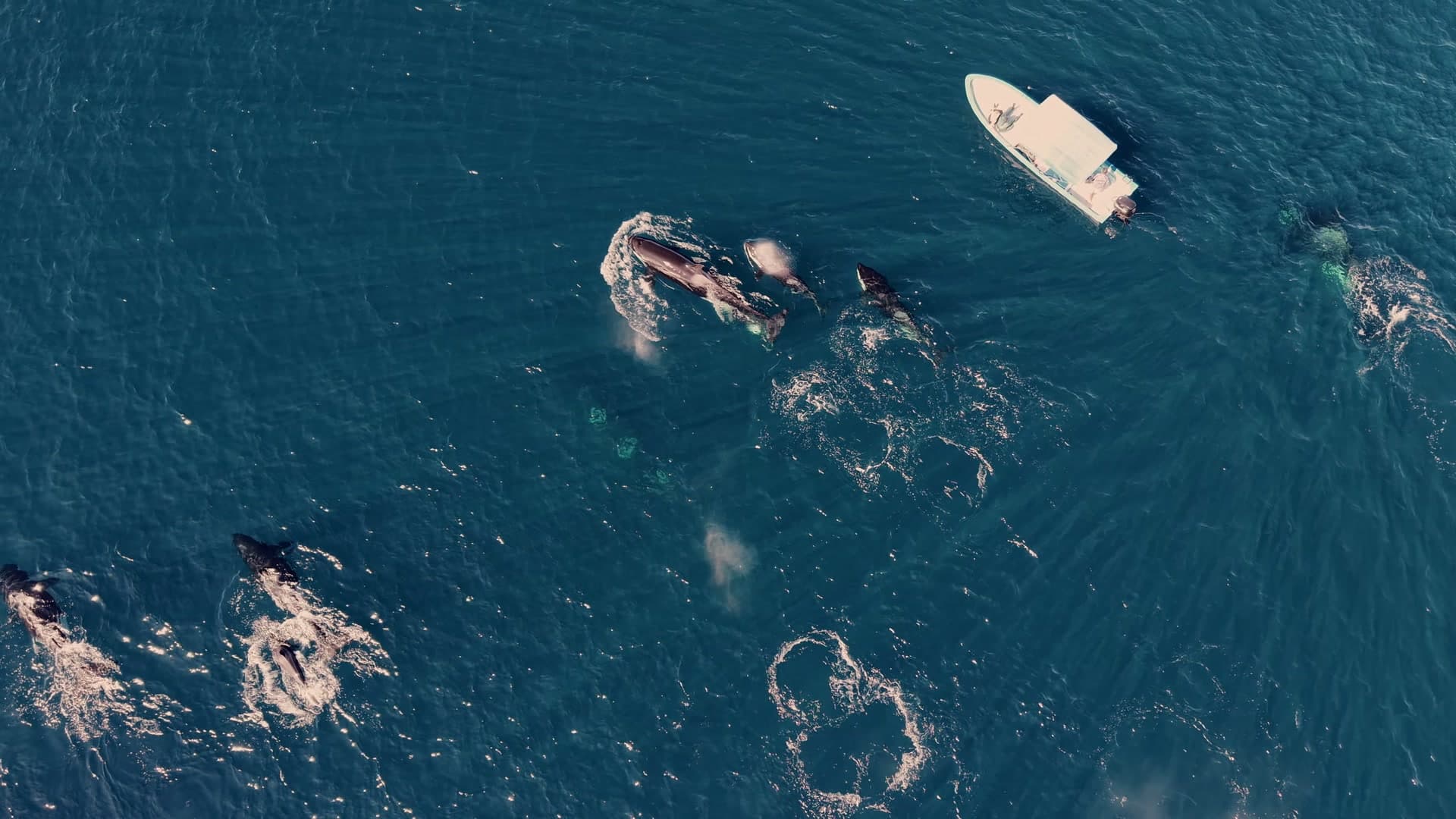
The short answer: April through June is Bajablue's public Master Seafari window in the Sea of Cortez near La Ventana, Baja California Sur. Orcas are opportunistic, not guaranteed, and not limited to two months. If seeing orcas is the single reason you're booking, plan for more water days and ask the Bajablue team about recent pod activity before choosing dates.
Why April–June Is the Master Seafari Window
Orcas move through the southern Sea of Cortez following prey and conditions. Spring brings warmer water, mobula activity, and long search windows around Cerralvo Island, which is why the Master Seafari is built around April through June.
The Comisión Nacional para el Conocimiento y Uso de la Biodiversidad (CONABIO) documents that the Sea of Cortez contains over 800 fish species and supports 39% of the world's marine mammal species, making the spring upwelling here one of the most concentrated marine feeding events in the Pacific.
Month-by-Month Breakdown
April
Water temperature climbs and mobula ray aggregations begin forming. Orcas are possible when prey and recent pod activity line up. Calm mornings and lighter winds make longer search days more realistic.
May
Water warms and mobula ray schools can build in size. Orcas may pass through, sometimes with active hunting behavior, but every sighting depends on wild animal movement and conditions that week.
June
Water keeps warming and mobula activity remains a major draw. Orcas are still possible, then activity can change as prey moves. Wind picks up, so morning departures usually give the best sea state.
What If You Can't Come in April–June?
Orcas can be seen opportunistically outside the public Master Seafari window too, including winter/spring and occasional fall sightings. The trade-off is that sea conditions, prey, and recent pod movement matter a lot. If your priority is general marine wildlife and not specifically orcas, our Ocean Safari day trip is the simpler fit for dolphins, mobulas, sea lions, and seasonal whales.
Which Tour Should I Book for Orca Season?
For the most patient orca search, we recommend the Master Seafari. It's a 7-day immersive expedition with departures March through August — covering the full April–June orca window — and five water days to respond to weather and recent sightings. The Blue Expedition gives three water days and is a strong runner-up. Single-day Ocean Safaris can still get lucky, but they have less time and range.
How Far in Advance to Book
- Master Seafari (departures March – August): Book early. We cap groups at 12 guests and the best dates can fill well ahead of the season.
- Blue Expedition (peak season): Book at least 60 days ahead.
- Ocean Safari (year-round): 2–3 weeks ahead is usually sufficient outside of peak season.
What to Pack Specifically for Orca Encounters
- 3mm shorty wetsuit — water is comfortable but you'll spend hours in it (bring your own).
- Polarized sunglasses — critical for spotting dorsal fins from the boat.
- GoPro with floating wrist strap — orcas surface unexpectedly close.
- Reef-safe sunscreen — choose mineral sunscreen and avoid oxybenzone-based formulas near sensitive marine areas.
- Patience. Once a pod is located, time near orcas can be brief. The build-up — scanning the horizon and reading the water — is part of the experience.
Wildlife Notice
Bajablue Tours follows a simple patient-wildlife approach: no chasing, no touching, no feeding, and no crowding animals for a closer look. The Sea of Cortez is a UNESCO World Heritage Site and one of the few places globally where wild orcas may pass through, so every outing is handled with patience and restraint.
Bottom Line
If orcas are the dream, choose more water days, stay flexible, and ask the Bajablue team what has been moving recently. The Master Seafari gives the best search window, but the ocean still decides.
Last updated: April 8, 2026. Written by Bajablue Team, based in La Ventana, Baja California Sur.
Plan Your Expedition
Ready to see it for yourself? Book any of our marine expeditions or message us with questions.