
Humpback whales
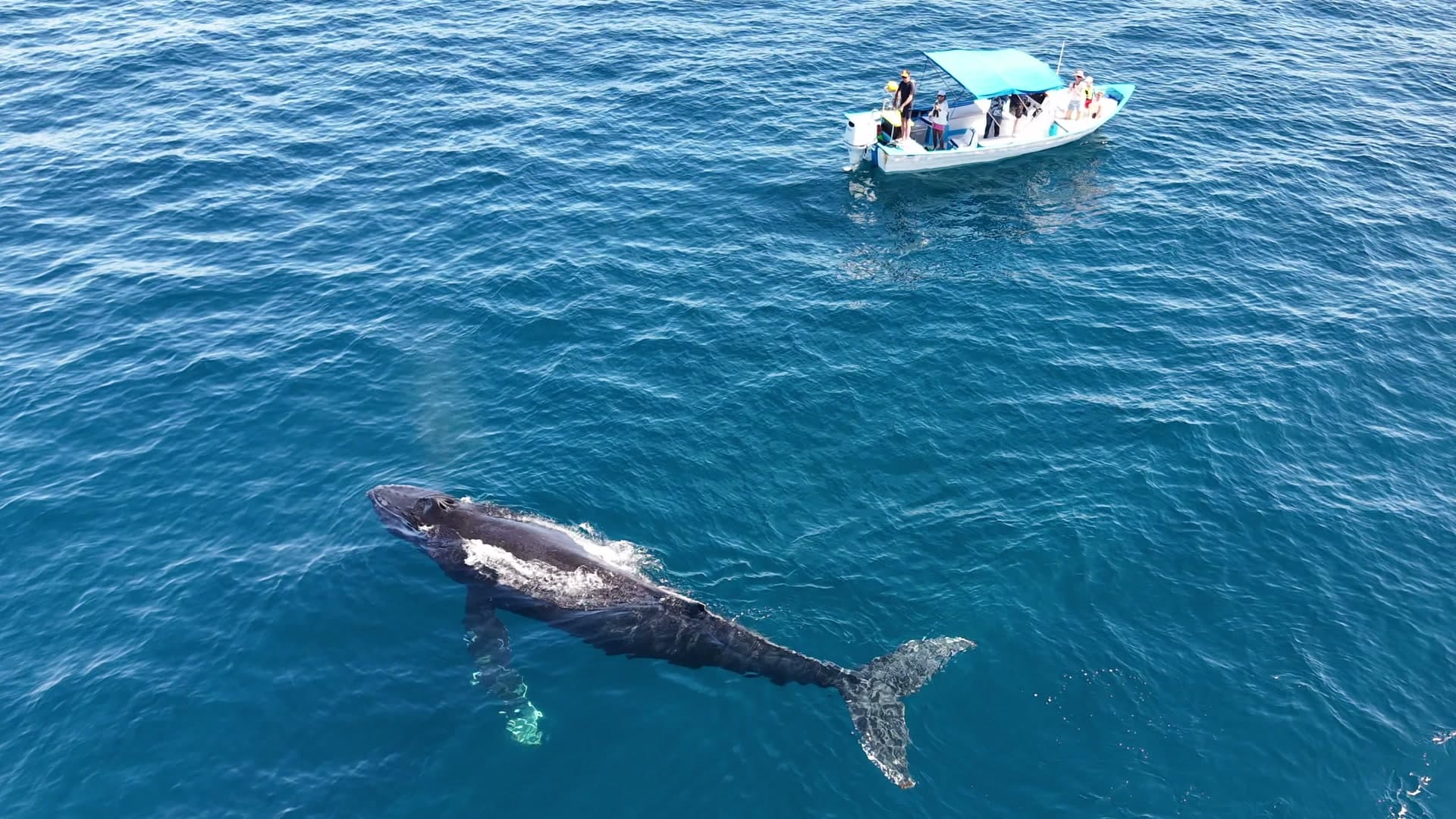
Humpbacks can appear in Baja California Sur waters during cooler months. They are often the whale travelers recognize first from surface behavior.
Seasonal whale watching guide
From La Ventana, whale watching means an open-water boat search in the Sea of Cortez. Winter and spring are the main planning window, but routes and sightings depend on wind, reports, and animal behavior.
Watching whales from La Ventana is not the same as a Pacific lagoon trip. Here, the day is open water. A whale may appear while the crew is also watching dolphins, mobulas, sea lions, turtles, seabirds, or a rare orca report.
Whales stay boat-observed with Bajablue. No whale swimming, no pressure for a closer photo, no pretending a moving animal owes the boat anything.
Boat-based whales
Yes. From La Ventana, whale watching is an open-water Sea of Cortez search, not a lagoon-style certainty. Bajablue observes whales from the boat and uses the season, recent activity, wind, swell, bird movement, and animal behavior to choose a route.
Boat-based whale observation, whale-shark swimming, and orca encounters are different experiences with different rules and expectations.
Separate boat-based whale watching from lagoon trips, whale-shark swims, and orca searches.
Humpbacks can appear in Baja California Sur waters during cooler months. They are often the whale travelers recognize first from surface behavior.
Large whales may move through the Sea of Cortez seasonally. Food, water, and recent movement matter more than a neat promise.
Sperm whales are deep divers. If they appear during an expedition day, the encounter is boat-based and patient.
Many whale days are also dolphin, mobula, sea lion, or seabird days. That is part of why open-water trips work.
Best timing
Mexico's annual whale-observation notices set specific Baja California Sur areas and date windows. La Ventana is Bajablue's open-water departure base, not a lagoon-style whale appointment.
Use winter into spring as a planning cue, then ask what boats have actually seen this week. A whale day can mean patient boat observation, distant blows, or no whale at all.
Boat distance
Whales are not swim targets. Guides keep observation boat-based, read behavior, and avoid pressure. If a whale is traveling, feeding, resting, or avoiding boats, it gets space.
That is better for guests too. A calm whale watched well is more powerful than a stressed animal forced into a bad moment.
Trip choice
Ocean Safari is the one-day fit for travelers who want to search the Sea of Cortez from La Ventana. If whales are active nearby, the crew can slow the day around careful boat observation.
Blue Expedition and Master Seafari add multiple water days. That helps when wind changes, visibility shifts, or whales are reported farther from the usual line.
Expectations
A good La Ventana whale day keeps scanning for dolphins, mobulas, sea lions, turtles, seabirds, and other signs of life. That keeps the day alive when whales are deep, distant, or quiet.
Bring sun protection, a wind layer, a simple camera setup, water-friendly clothing, and patience. The open Sea of Cortez rewards people who watch carefully.
Source notes
Last reviewed: June 30, 2026
Whale-watch questions
Yes. La Ventana gives access to Sea of Cortez routes where whales may move seasonally, especially in cooler months and spring.
No. Bajablue observes whales from the boat and does not sell whale swimming.
No. Whales are boat-observed only. If a whale is traveling, feeding, resting, or avoiding boats, the guide gives it space.
Possible wider Baja California Sur species include humpback whales, blue whales, fin whales, gray whales, sperm whales, and other seasonal marine life depending on conditions. Bajablue does not treat any species as guaranteed from La Ventana.
No. Bajablue can plan around the stronger whale season and recent local reports, but whales move freely through open water. The trip is a respectful boat-based wildlife search, not a guaranteed whale show.